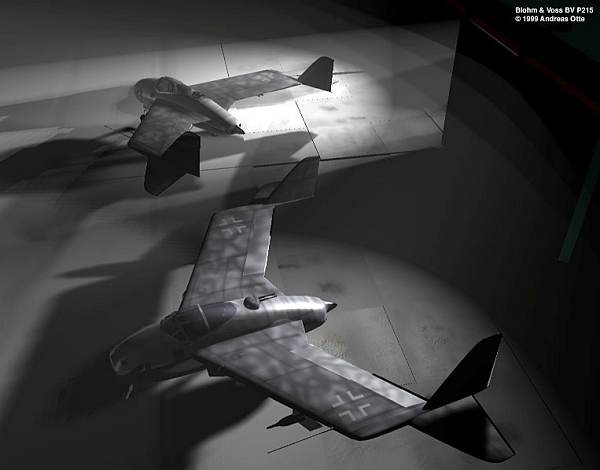
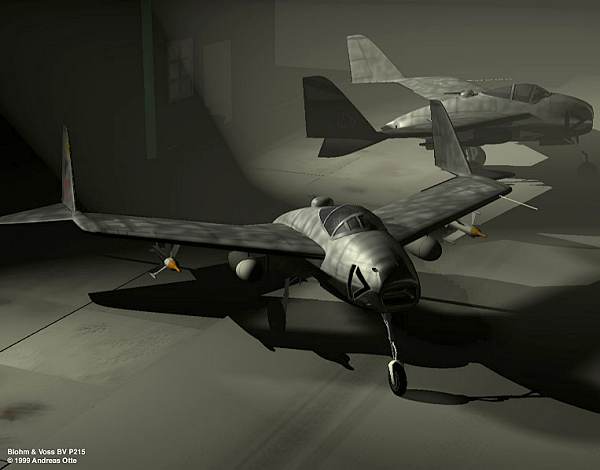
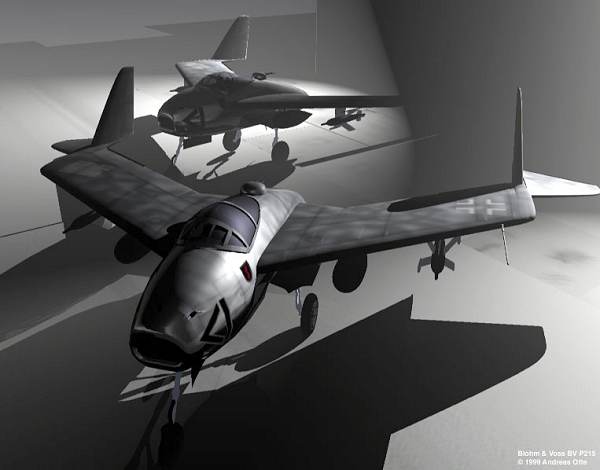
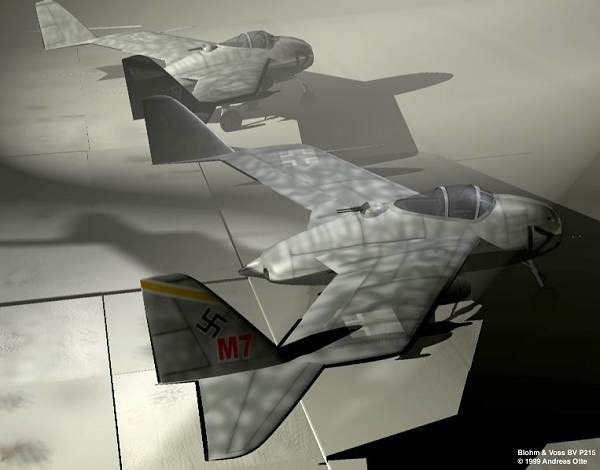
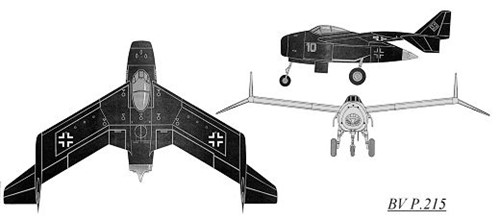
 A specification was issued by the Technische Luftrüstung (Technical Air Armaments Board) in late January 1944 for the definitive night fighter. Preliminary requirements were to be a top speed of 900 km/h (559 mph), an endurance of four hours, armament consisting of four cannon and internally mounted radar (FuG 240 or 244).
Dr. Richard Vogt, who designed the BV P.212, immediately began work on an aircraft to meet the specifications issued for the new night fighter. Vogt used the BV P.212 as the overall basis for the new BV P.215 night fighter. The fuselage was short, with an air intake in the nose leading directly to the two Heinkel He S 011 mounted in the rear fuselage. As with other Blohm & Voss Vogt designs, the fuselage structure was built up out of the intake tube, and all components attached to this structure (see the BV P.211.02). The wings featured a 30 degree sweepback and 6 degrees of dihedral; internally the support came from a wide wing box, constructed from welded steel. The outer wing tips angled down at 23 degrees, and assisted stability and control. Warm air diverted from the engine compartment was circulated through the wings for de-icing purposes. There were two small vertical fins and rudders located on the trailing edge of the wing, where the outer wing tips angled downwards. Total fuel capacity was 7800 liters (2061 gallons), stored mainly in wing tanks. An ingenious system to pre-heat the fuel was designed; a pump would circulate the fuel of the fuselage feeder tank through a spiral line around the engine compartment and into the wing tanks. The nose landing gear was taken from the Heinkel He 219 and retracted to the rear, and the two main wheels (angled forward by 16 degrees) also retracted forwards into the fuselage. The pressurized cockpit held a three man crew; a pilot, radar operator and navigator/radio man, and all three were provided with ejection seats. A wide variety of offensive armament could be carried in the aircraft's nose, and defensive armament consisted of a FHL 151 remote controlled, rear-facing turret armed with either one or two MG 151/20 20 mm cannon. A provision was made for possibly mounting two MK 108 30 mm cannon firing upwards, located behind the cockpit. Two SC 250 250 kg (551 lbs) or SC 500 (1102 lbs) could be carried in a belly recess. The BV P.215's constuction was mainly of metal througout, except for wooden control surfaces and the aircraft's nose. The nose was made of wood because of the installed electrical equipment. The installed electrical radio/radar equipment is listed below.
In the original Blohm & Voss proposal, it was pointed out that the P.215 was easily transportable. After removing the wings, the fuselage would be easily transportable with no need for specialized lifting equipment. On February 27, 1945, the specifications were upgraded for the future nightfighters, which none of the competitors' aircraft were able to achieve.Although the P.215 would have had good performance figures, it too did not reach the new specifications either. Nevertheless, it was chosen for further development on March 20, 1945. The end of the war ended any further development of this novel aircraft.
| Span | Main Wing Span | Length | Height | Track Width | Wing Area |
| 18.8 m 61' 8" |
14.4 m 47' 3" |
11.6 m 38' 1" |
5.0 m 16' 5" |
2.8 m 9.2' |
63.0 m² 678.13 ft² |
| Empty Weight | Crew | Ammunition* | Fuel | Equipment | Bombs | Flying Weight* | Wing Loading |
| 7400 kg 16314 lbs |
300 kg 661 lbs |
600 kg 1323 lbs |
6500 kg 14330 lbs |
766 kg 1689 lbs |
1000 kg 2205 lbs |
14680 kg 32364 lbs |
233 kg/m² 47.7 lbs/ft² |
*Ammunition and flying weight varies according to weapons load, listed weight for five MK 108 w/120 rounds each
| Max. Speed | Rate of Climb | Ceiling | Range | Endurance |
| 870 km/h / 8500 m 541 mph / 27887' |
10 m /sec 22 ft /sec |
14800 m 48556' |
2340 km 1454 miles |
5.2 hours w/ one engine @ 6000m 19685' |
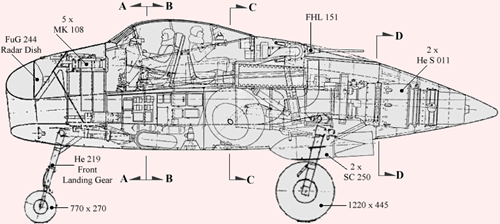
 |
 |
 |
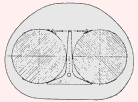 |
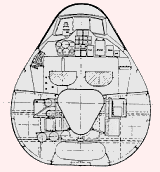
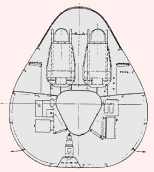
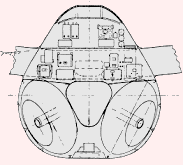
| Section A - A | Section B - B | Section C - C | Section D - D |
Weapon Variants for the BV P.215 Night Fighter
click on the small bluprint icon for original BV drawings
| Weapon | Number Installed | Rounds Each | Additional | |
| MK 108 30mm cannon | 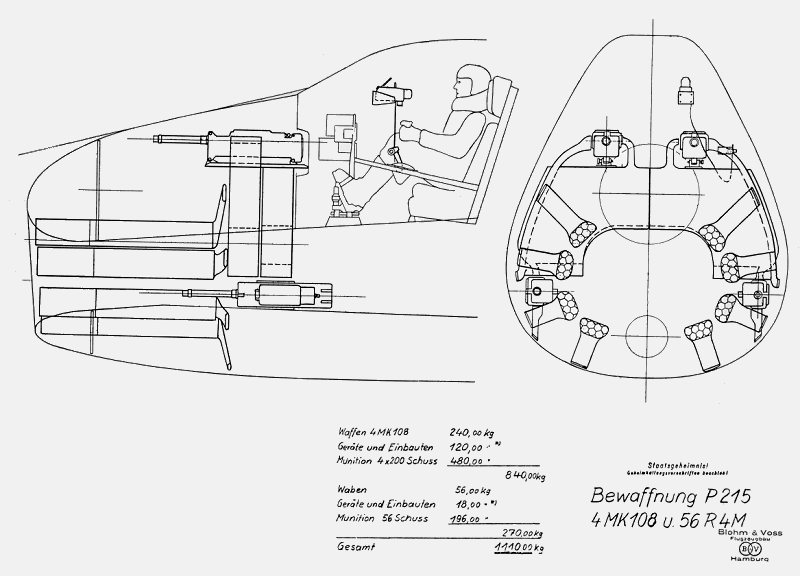 |
Four | 200 | 56 R4M rockets |
| MK 108 30mm cannon | 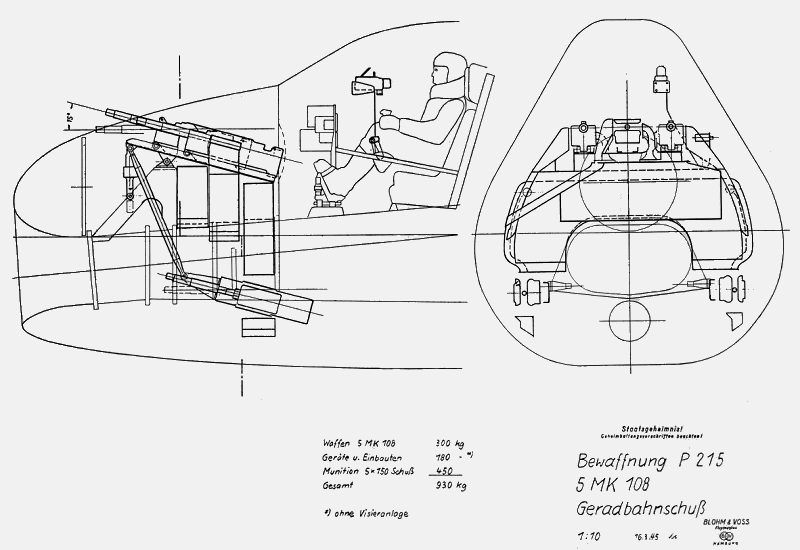 |
Five | 150 | |
| MK 112 55mm cannon | 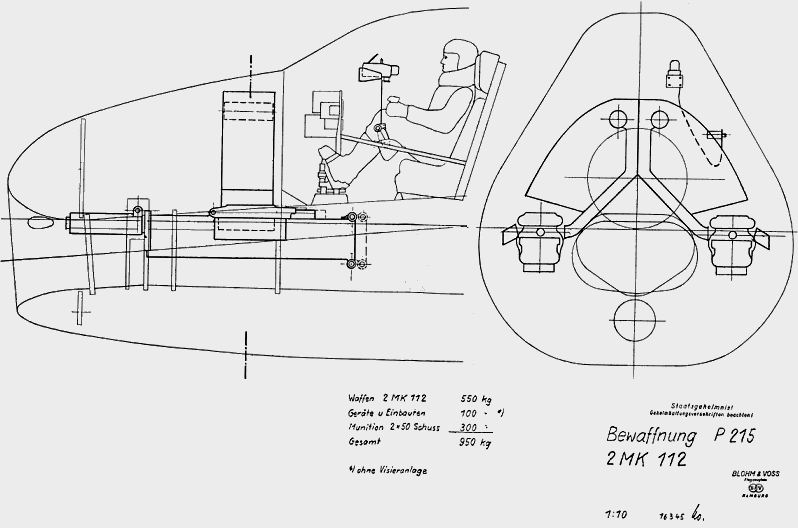 |
Two | 50 | |
| MG 213/30mm cannon | 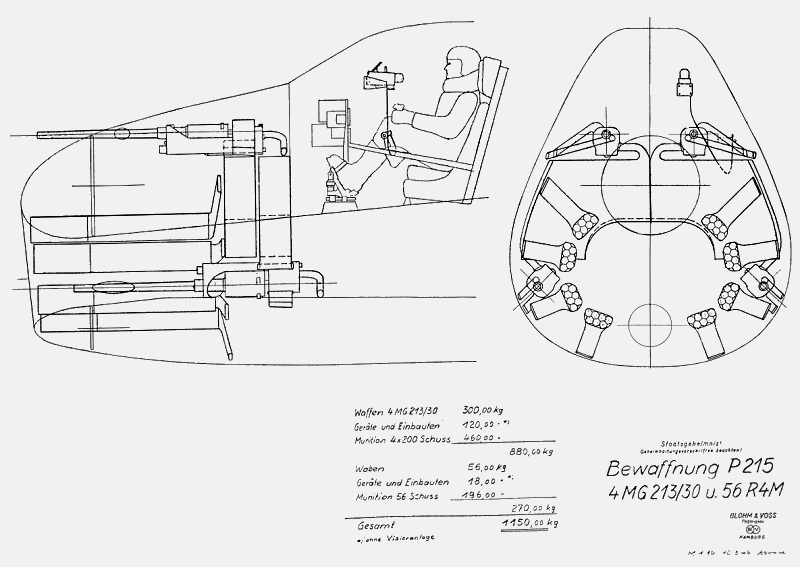 |
Four | 200 | 56 R4M rockets |
| MG 213/30mm cannon | 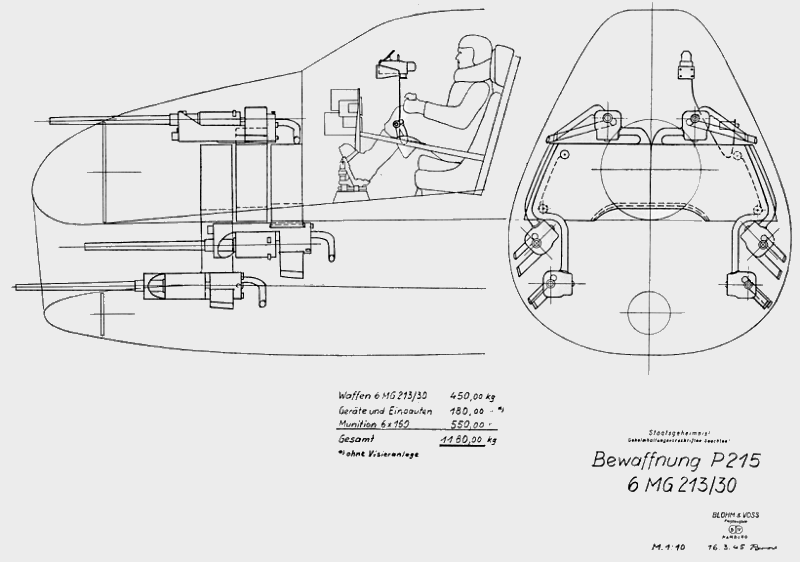 |
Six | 160 | |
| Equipment | Description | Weight |
| FuG 244 | Airborne Search Radar concave mirror antenna Range: 200 m - 50 km (656 ft - 31 miles) |
150 kg (331 lbs) |
| FuG 25a | Ground-to-air Identification friend or foe (IFF) |
12 kg (26 lbs) |
| FuG 280 | Airborne Search Radar infra-red homing Range: 4 km (2.49 miles) |
15 kg (33 lbs) |
| FuG 350 | Airborne Search Radar passive receiver for enemy radar Range: 50 km (30 miles) |
24 kg (53 lbs) |
| FuG 218R | 46 kg (101 lbs) |
|
| FuG 24SE | Ground/Air Radio homing device |
18 kg (40 lbs) |
| Fu Bl 3 E | Bad Weather Landing Aid blind landing radio equipment |
10 kg (22 lbs) |
| FuG 101a | Bad Weather Landing Aid precision altimeter |
16 kg (35 lbs) |
| Peil G6 | Navigation direction finding equipment |
24 kg (53 lbs) |
| FuG 29 | Ground/Air Radio Airborne situation report receiver |
8 kg (18 lbs) |
Wing drawing of March 23, 1945
Wing drawing of March 27, 1945
Outer wingtip drawing of March 19, 1945
Component list (by material type & weight)
Below color images from:
Luftwaffe Secret projects
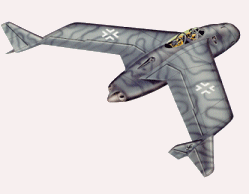
Koei German Project Aircraft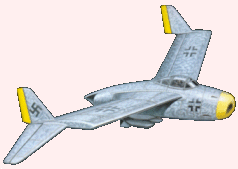
Artwork by Andreas Otte