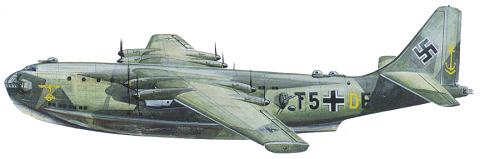
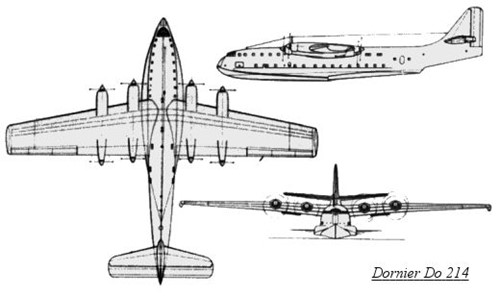
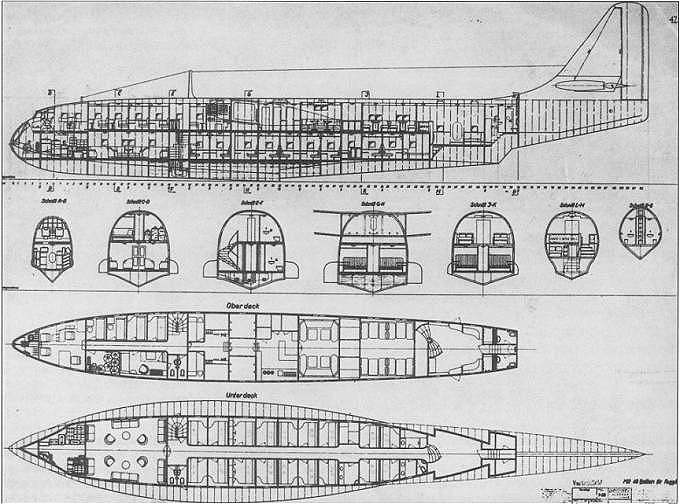
 Originally designed as the Do P.93 for passenger transatlantic service from Lisbon to New York, the Do 214 was redesigned as the P.192 for military service. Instead of the usual Dornier fuselage stabilization floats, a more aerodynamically refined design was to be used. Basically, long bulges along the fuselage bottom were added. To test this new design, the Göppingen Gö 8 was built in 1940 at Schempp-Hirth. Constructed of wood with no engines, and built at a scale of 1:5, the Gö 8 was towed by a motorboat to test the hydrodynamic stability of the new fuselage bulges. The results were then sent to the Göppingen laboratories where the details of the aerodynamic characteristics were also examined. After receiving the results of the tests, the RLM issued the aircraft designation 214 to Dornier for this new flying boat. In 1941, a full-sized fuselage mockup was begun to investigate the interior layout.
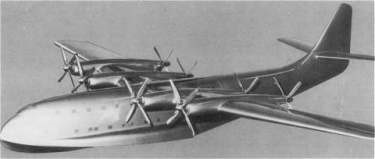
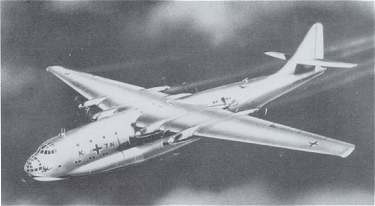
The Dornier 214 was a very large aircraft with a wingspan of 60 meters and a loaded weight of 145 metric tons. The fuselage was streamlined and of a round cross-section, with the interior consisting of two decks. Wings featuring a small amount of sweepback on the leading edge, with straight trailing edges were shoulder mounted on the fuselage, a common feature on seaplanes. Eight Daimler Benz DB 613 24 cylinder piston engines provided the power, with four engines pulling and four engines pushing. All eight engines were driven by four-bladed VDM variable pitch propellers; the front propellers had a 5.0 m (16' 5") diameter, the rear had a 4.6 m (15' 1") diameter. The rear propellers were driven by an extension shaft and were also hinged, which allowed the rear propellers to be raised during takeoff for water clearance. This method was also used on the Dornier Do 26. Each engine had its own coolant and oil systems and all eight engines were monitored by a flight engineer from a central station. Fuel capacity consisted of 66000 liters (17435 gallons) in the fuselage and 1500 liters (396 gallons) in the wings. A single fin and rudder was fitted, the tail planes were of a conventional design. The civil aircraft crew consisted of twelve men, which consisted of a captain, two pilots, navigator, radio operator, two flight engineers, two stewards, two hostesses, and one crew member held in reserve. In the civil version, forty passengers could be carried in comfort, with the possibility of increasing the passenger load and 2.6 metric tons of freight and luggage could be carried in the lower fuselage storage area. There were at least nine variants of the Do P.192/Do 214 planned, with various defensive and offensive weapon options.
In 1942 the RLM criticized Dornier for working on the civilian version of the 214 and ordered them to concentrate on the military version. The mockup was reconstructed to investigate the best placement of the gun turrets and other military stores. By 1943, it was realized that long-range flying boats were not needed due to the worsening war situation, and thus the Do 214 project was canceled.
| Span | Length | Height | Wing Area |
Empty Weight |
Loaded Weight |
Max. Speed |
Cruising Speed |
Landing Speed |
Service Ceiling |
Range |
| 60 m 196' 10" |
51.6 m 169' 4" |
14.3 m 46' 11" |
500 m² 5382 ft² |
76000 kg 167551 lbs |
145000 kg 319670 lbs |
490 km/h 304 mph |
425 km/h 264 mph |
155 km/h 96 mph |
7000 m 22966' |
6200 km 3853 miles |
The Göppingen Gö 8 was a 1:5 scale model built to investigate the newly designed fuselage bulges for the Do 214 seaplane. It had a wingspan of 12 m (39' 4") and was built entirely of wood.
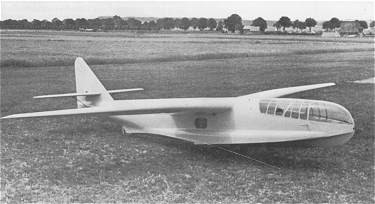
Wartime models of the Dornier Do 214
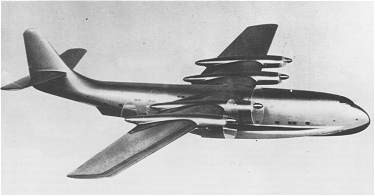
|
Gerd Heumann's impression of the
military version of the Do 214 in flight
military version of the Do 214 in flight
Dornier Do 214 civil version
Click to get larger picture.
Dornier Do 214 military version
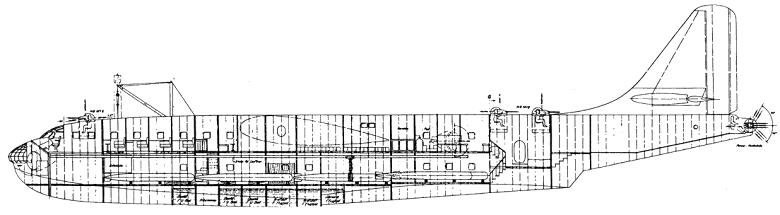
Click to get better picture.
Do 214 by Keith Woodcock,
from Monogram Monarch #2: Dornier 335
from Monogram Monarch #2: Dornier 335
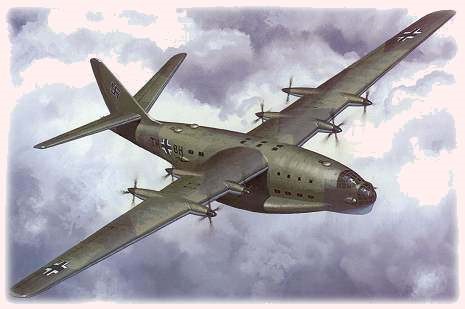
Image from Luftwaffe Secret Projects: Strategic Bombers 1935-1945